 Website
 Optimisation
 Support
 Training
 Blog
Blog db8
db8 Portfolio
 Reviews

A Saturday packed with Linux and open source at NLLGG
On Saturday 14 March I was in Utrecht at the national meeting of March 2026 of the Dutch Linux User Group (NLLGG). The association organized a General Members Meeting there, followed by an interesting program with six presentations divided over three time slots.
For me it was an inspiring day full of open source discussions, technical knowledge and enthusiastic Linux users. Linux is an important foundation of the internet. Many servers run on it. The Joomla websites of our clients are also hosted on Linux web servers.
My presentation: RustDesk Remote Desktop Support
I was invited to give a presentation about RustDesk.
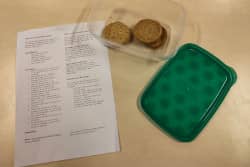 As often, I started with my passion for open source software. And with an open source story there should of course also be… open source cookies. This time I again brought homemade cookies together with an A4 sheet explaining the ingredients, the preparation method and the license terms for using these cookies. These license terms were based on the four freedoms that open source software gives to its users. Also at this event the open source cookies were very popular.
Why RustDesk is interesting for IT support
For everyone working in IT support, tools for remote access are essential. Programs such as TeamViewer and AnyDesk are popular because they make it easy to control another computer remotely. The disadvantage is that these solutions are closed source. That means you depend on their infrastructure, servers and licenses.
For organizations or administrators using Linux, or simply wanting more control over their data and connections, there are fortunately good open source alternatives. These offer something proprietary software often cannot: freedom, transparency and privacy. You can host them yourself, manage them yourself and fully control how the connections work.
In my presentation I showed how RustDesk works, how you can use it for remote support and why it can be a strong alternative to commercial solutions. I gave a demo where I created a connection with another laptop in the room, and passwordless with a computer at another location. The slides from the presentation are available at https://petermartin.nl/en/presentations/linux/linux-remote-desktop-support
Social engineering and the Odido hack
After my own presentation I attended the session “Avoid being hacked; protect yourself against social engineering.” This topic was very relevant because of the recent hack at Odido. In this incident, personal data of about six million (former) Odido customers was stolen using social engineering techniques. Part of this data has already appeared on the dark web. Also the address details of yours truly.
During this presentation they discussed how the Odido hack probably happened (the investigation is still ongoing). The problem with these kinds of hacks is that once personal data leaks, criminals start using it for phishing. With enough personal information phishing becomes much more convincing and people are more likely to become victims of online fraud.
How you can better protect yourself
During the session several practical tips were given to become more resilient against these kinds of attacks. For example by using certain Linux tools. Think of:
- using a password manager
- passkeys for safer authentication
- two-factor authentication (2FA)
If you use these kinds of measures it becomes much harder for attackers to take over accounts, even if they have your personal information.
Ubuntu on your phone: UBports
Finally I attended the presentation “UBports, Ubuntu on your phone.” In this session they talked about the history of Ubuntu Touch, the mobile version of Ubuntu that was originally started by Canonical. Although Canonical stopped the project, it was later continued by the community through the organization UBports.
The presentation was not only about the technology, but also about the practical experience of using a Linux phone in daily life. Topics included for example:
- the development of Ubuntu Touch
- the organization behind UBports
- the experience of regular users
- the current state of Linux on mobile devices
It remains impressive to see how a community project keeps a mobile operating system alive.
An educational Linux Saturday
It was a fun and educational Saturday. The combination of technical presentations, open source enthusiasm and conversations with other Linux users makes these meetings very valuable.
Are you interested in open source software in general and Linux in particular? The meetings of the Dutch Linux User Group are highly recommended. You learn about new tools, hear interesting real-world stories and meet people with the same passion for open technology.
And if I am there again… who knows, maybe I will bring homemade open source cookies again.


